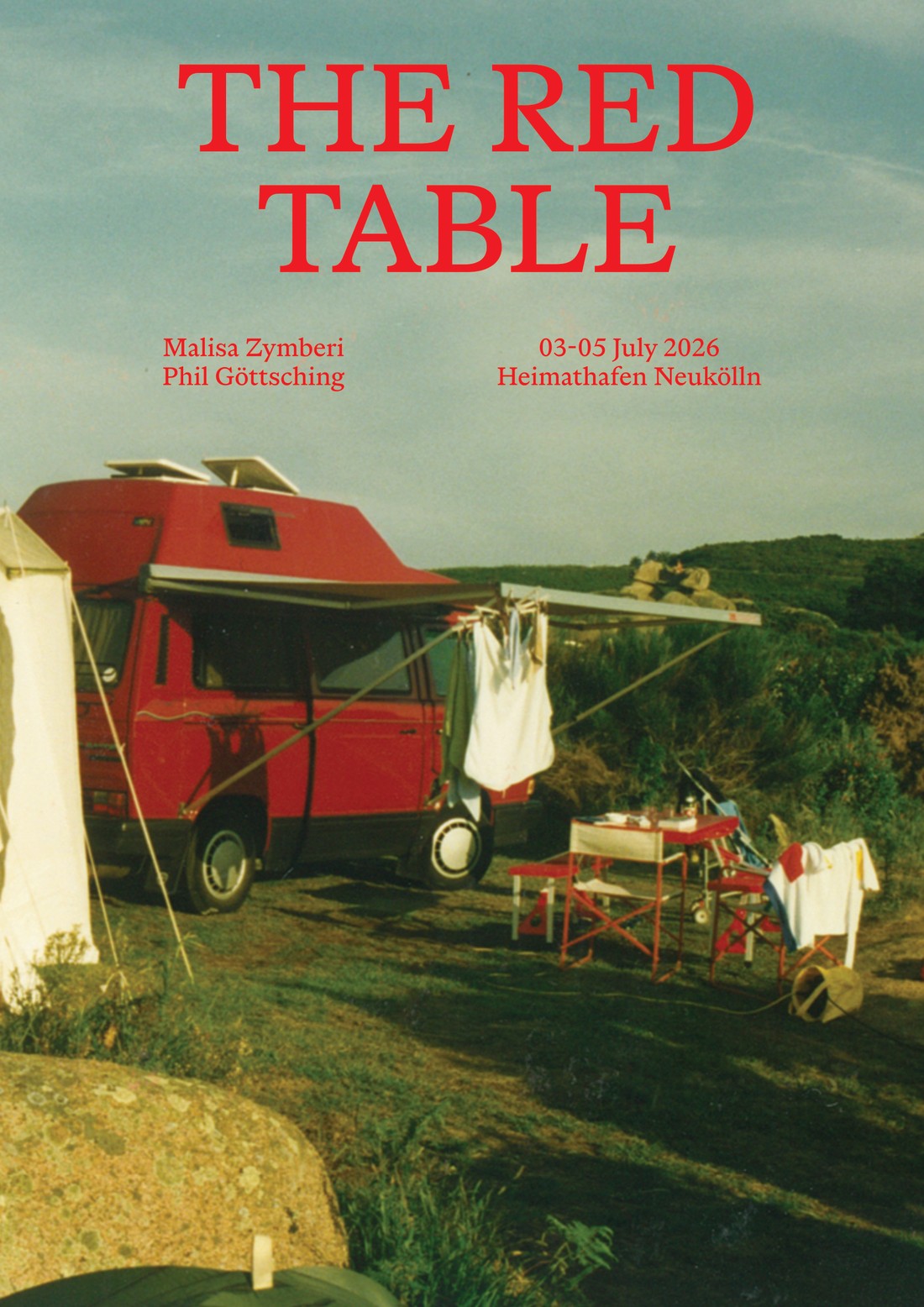
Heimathafen, Berlin DE · 48 Hours Neukölln · July 2026
| Artists | Malisa Zymberi, Phil Göttsching |
| Venue | Heimathafen Neukölln, Berlin |
| Dates | 3–5 July 2026, 48 Hours Neukölln |
The Red Table installation is based on the experience of a couple raised in two different countries under unequal borders, now living together in Berlin. The idea of freedom in childhood is brought to life in a space that visitors can enter and experience.
The idea emerged when Malisa visited her partner Phil's family and his mother showed her his childhood photo album. While looking through the photos, she recognized the same red camping table her own family used in Kosovo. But the similarity revealed a contrast: Phil's red table traveled freely across Europe, while her movement was restricted within borders. At the same time, the photos showed shared family rituals of camping and togetherness, challenging her feeling of being fundamentally different from "Europe."
At the center of the installation are two identical red camping tables from their childhoods, each representing one world. On both tables are items representing their dreams, challenges, and shared memories: childhood diaries, songs from their early years, a folder of rejected visas, and a passport filled with stamps. Transcribed phone calls with aunt and granny reflect questions about their love decisions.
Family photographs of camping around the same red tables highlight similarity despite different realities. A TV shows Malisa and Phil answering two questions: What are borders to you? and What is love to you?
While borders continue to produce inequality, the installation shows how universal experiences like family rituals, music and love create shared identities and belonging that bridge difference. Contrast and connection coexist within the space, if humans allow it.